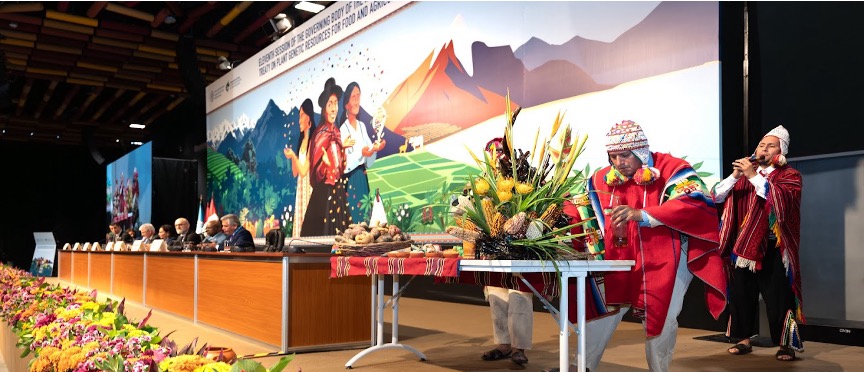
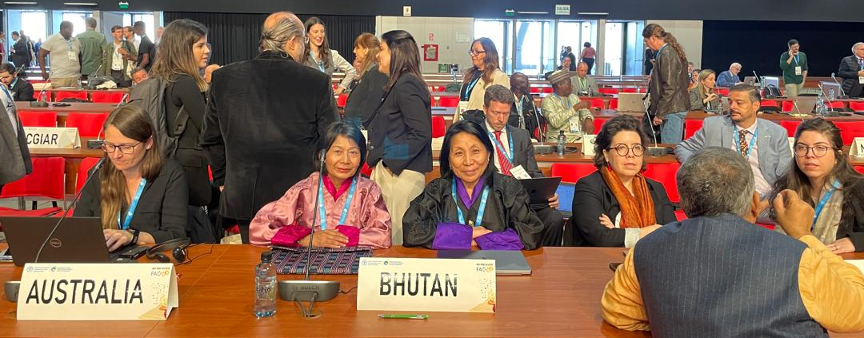
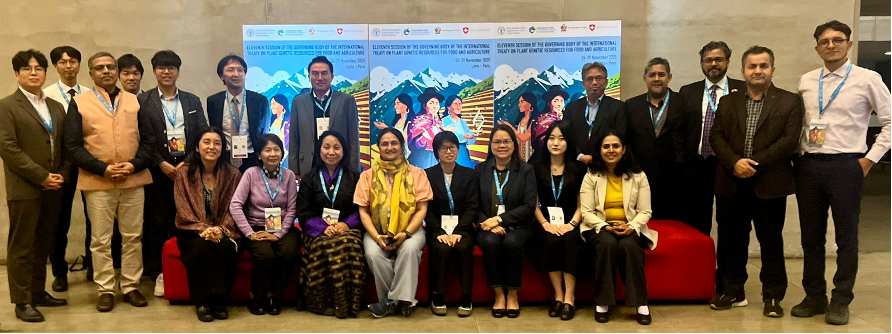
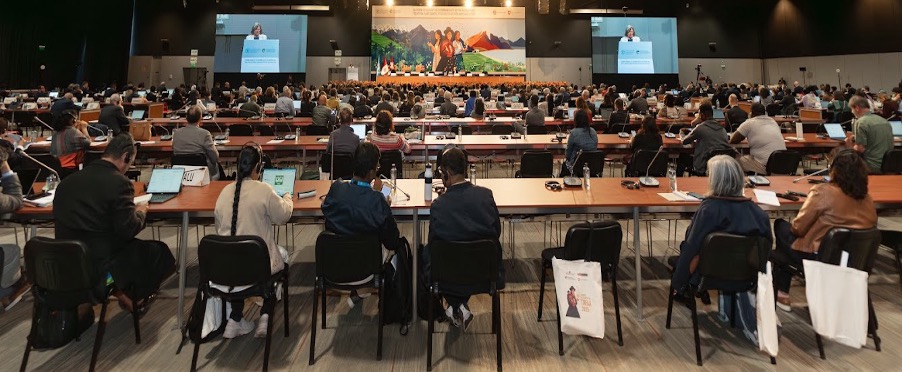
Bhutan in GB 11: Bhutan participated in the 11th Session of the Governing Body of the International Treaty on Plant Genetic Resources for Food and Agriculture (ITPGRA). The 11th Session of the ITPGRA was organised by the ITPGRFA Secretariat under the aegis of FAO and co-hosted in collaboration with the Government of Peru and the Government of Switzerland.
ITPGRFA objectives: The objectives of this Treaty are the conservation and sustainable use of plant genetic resources for food and agriculture and the fair and equitable sharing of the benefits arising
out of their use, in harmony with the Convention on Biological Diversity, for sustainable agriculture and food security.
National Focal Point: Bhutan signed the Treaty on 10 June 2002, Bhutan then ratified the Treaty on 2 September 2003 and entered into force on 29th June 2004. The National Biodiversity Centre (NBC) is the National Focal Agency and the Program Director of the Centre is the National Focal Point of the ITPGRFA.
Objectives of 11th Session of the Governing Body Meeting of the ITPGRFA:
- Advance negotiations to improve the Multilateral System (MLS) and benefit-sharing.
- Review and update the SMTA and consider expanding Annex I crop coverage.
- Strengthen Treaty implementation in conservation, sustainable use, and Farmers’ Rights.
- Improve the Global Information System (GLIS) and related knowledge-sharing tools.
- Address financial and budget issues, including the Funding Strategy and support for developing countries.
- Set future strategic direction considering DSI and evolving global biodiversity policies.
Bhutan’s interventions in the GB11:
Bhutan made the required interventions in some agenda items. Bhutan joined the following committees/Groups during the GB 11:
a) Credential Committee: Bhutan was nominated as a representative of Asia in the Credential Committee. Two Credential Committee Meetings were held during the Session on 25th and 27th November to scrutinise and validate the credentials submitted by the participating Contracting parties.
b) Budget Committee: Bhutan, along with Japan, was nominated as a representative of Asia in the Budget Committee. Three Budget Committee Meetings were held during the Session.
c) G77 Small Group: Bhutan, along with the Philippines and Nepal, participated in the G77 meeting in discussing and finalizing the draft the G77 position on Agenda item 9.1. Implementation and Operations of the MLS representing Asia.
d) Report on Implementation and Operations of the Multilateral System:
In the Working Document – Report on Implementation and Operations of the Multilateral System, under the section titled “Accessions under medium- or long-term storage and accessions notified as available in the Multilateral System, by country,” Bhutan’s notified accessions were recorded as zero. Therefore, Bhutan made the following intervention: Bhutan welcomed the Report on Implementation and Operations of the Multilateral System and extended our appreciation for the ongoing efforts to strengthen the Multilateral System. A major share of crop germplasm from Bhutan are in the Article 15 Institutions, actively contributing to global food security. Further, in order to support the noble objectives of the treaty, Bhutan had notified the 1st batch of rice landraces into the MLS in 2015. However, these were not reflected. Therefore, Bhutan requested for reflecting the notified accessions from Bhutan in the Working document on Report on Implementation and Operations of the Multilateral System.
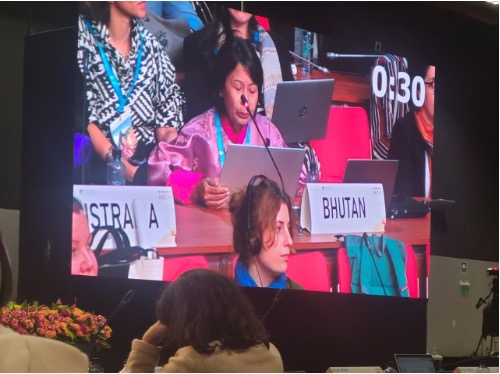
Further, as other developing biodiversity-rich countries, Bhutan also called for “strengthening information sharing, reporting, transparency, accountability and governance structures in the MLS”, emphasising that such improvements would benefit all stakeholders, “including small farmers.”
e) Bhutan delivered a statement on the Report of the Standing Committee on the Funding Strategy and Resource Mobilisation:
Bhutan drafted the Asia Regional Statement on the Report of the Standing Committee on the Funding Strategy and Resource Mobilisation and delivered the statement on behalf of the Asia Region.
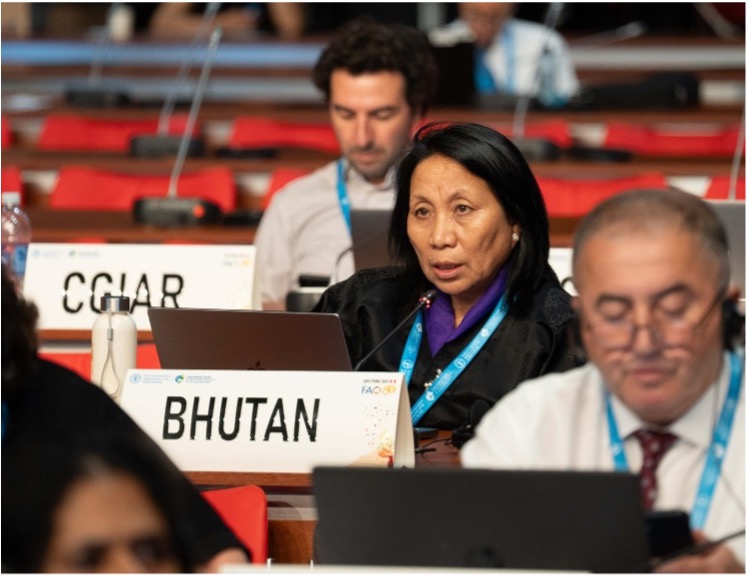
The Asia Region expressed appreciation for the Standing Committee on the Funding Strategy and Resource Mobilisation, valuing its work on the Funding Strategy Operational Plan 2020–2027—particularly its guidance on resource mobilisation, the Benefit-sharing Fund, and related targets. The Region also welcomed the Committee’s forward-looking consideration of potential transitional criteria for the Benefit-sharing Fund should the enhanced Multilateral System be adopted, noting that this will support ongoing discussions and future implementation efforts. Additionally, it thanks the Committee for developing the general policy and criteria for specific assistance under the Funding Strategy, recognising its significant value.
f) Cooperation with the Global Crop Diversity Trust
Bhutan welcomed the report on Cooperation with the Global Crop Diversity Trust. Then Bhutan joined Ghana, Egypt, and Kenya in expressing appreciation and gratitude to the Crop Trust and the Government of Norway for their support in strengthening 13 gene banks, including Bhutan, under the BOLD initiative.
g) GB-11 Chair’s Compromise Proposal: Draft Text for Resolution on the Enhancement of the Functioning of the Multilateral System on Access And Benefit-Sharing:
GB 11 Chair presented the draft chair’s compromise proposal: draft text for resolution on the Enhancement of the Functioning of the Multilateral system on Access and Benefit-sharing. The Chair sought to adopt a revised Standard Material Transfer Agreement (SMTA) with (DSI removed).
All the regions made interventions opposing the GB 11 Chair’s compromised proposal on the need to adopt the Revised SMTA.
Bhutan joined the Asian developing countries, GRULAC, the Near East and Africa Region on the Co-chair’s compromise proposal. Immediately after the Intervention by Egypt, the statement was delivered by India on behalf of the Asian developing countries, the Near East Region, the Africa Region and the Group of Latin America and Caribbean Countries (GRULAC) region.
Many developing countries and civil society actors strongly opposed the Adoption of the revised SMTA because it could undermine sovereign rights over seeds, allow “biopiracy,” and favour large agribusinesses over small farmers/indigenous communities.
Conclusion
The 11th Session of the Governing Body of the International Treaty on Plant Genetic Resources for Food and Agriculture (GB-11) concluded in Lima, Peru in late at night on 29th November 2025.
The MLS-enhancement agenda was deferred for further deliberation before GB12.
GB11 did adopt other decisions on:
- Conservation and sustainable use of plant genetic resources,
- Farmers’ rights,
- Cooperation with other international instruments and Treaty implementation matters.
- The treaty’s budget and work programme
Bhutan thanks the Treaty Secretariat for supporting the participation of two participants from Bhutan.


 Views Last 7 days : 1342
 Views Last 30 days : 6103
 Total views : 65966